Contact

Day 2: The Middle East

Falafel w/ Tahini Sauce

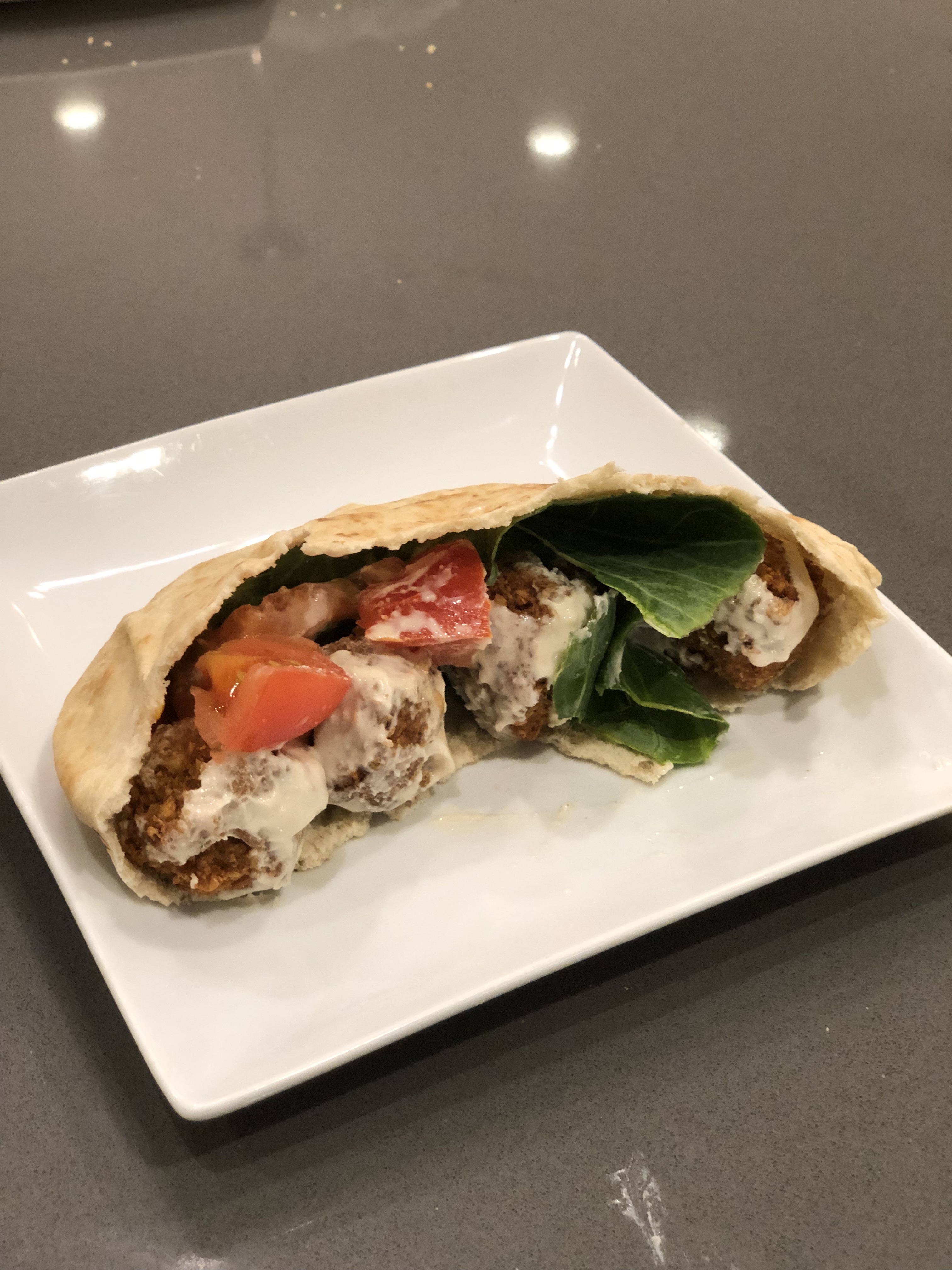
Welcome back! For day 2 of my journey, I travelled about 3,000 miles North from Kenya to arrive in the Middle East. As you can see from the title, I made falafel and paired it with tahini sauce.

While there is still some debate, most believe that falafel originated in Egypt about 1,000 years ago by Coptic Christians who used it as a replacement for meat during Lent. From Egypt, falafel spread across the Middle East to become to staple it is today. While falafel can be eaten plain (as shown above), it is usually served inside of pita with lettuce, tomatoes, and maybe peppers.
Now, to the cooking:

Ingredients:

  • 1 lb dry chickpeas
  • 1 small onion, roughly chopped
  • 1/4 cup chopped fresh parsley
  • 3-5 cloves garlic
  • 1.5 tbsp flour
  • 1.75 tsp salt
  • 2 tsp cumin
  • 1 tsp ground coriander
  • 1/4 tsp black pepper
  • 1/4 tsp cayenne pepper
  • Vegetable oil for frying

Step 1: Pour dry chickpeas into bowl and cover with about 3 inches of cool water and leave overnight. By the morning the chickpeas will have absorbed the water and grown in size.
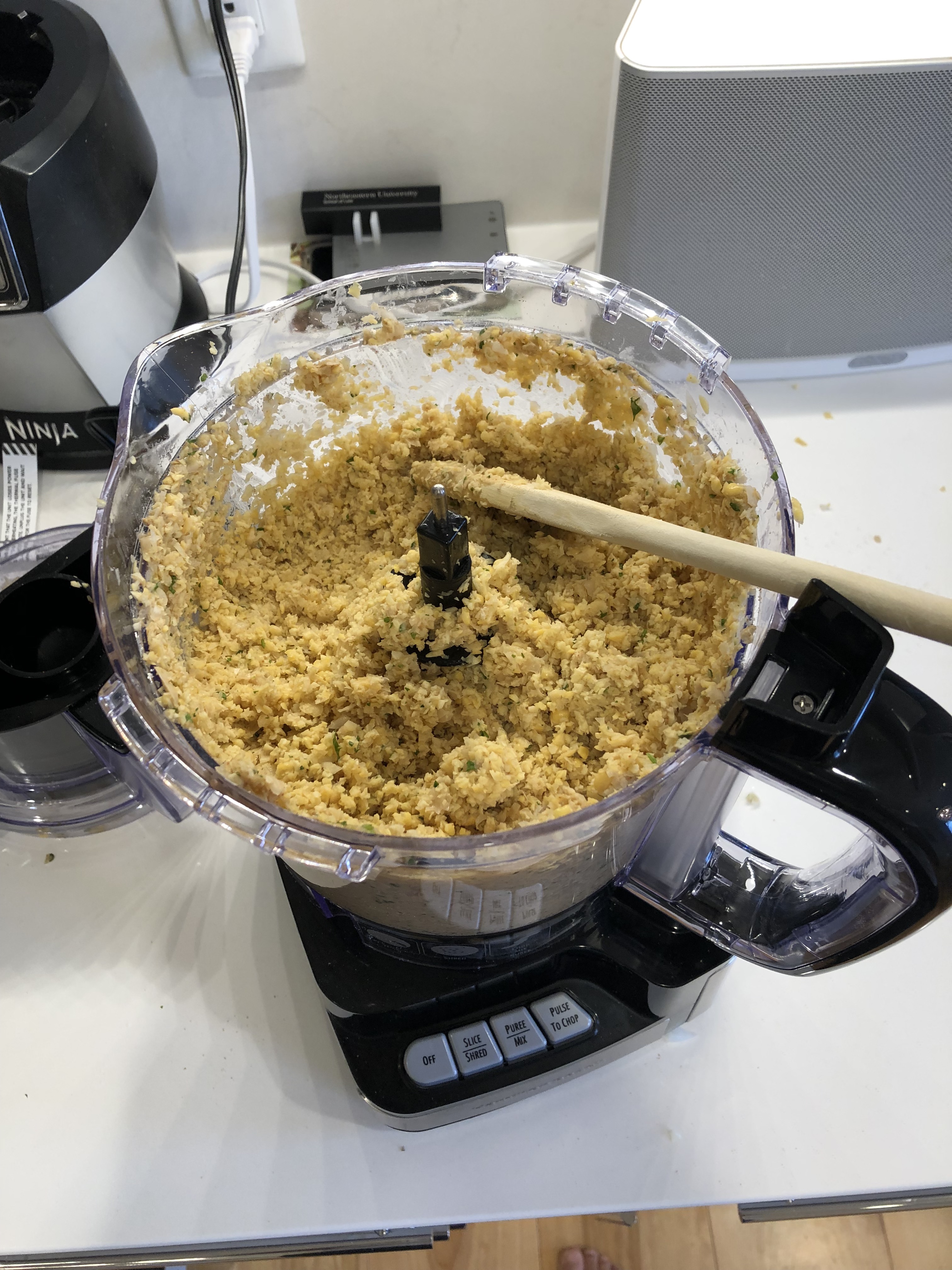
Step 2: Drain the chickpeas and pour them, along with the other ingredients, into a food processor. Blend the ingredients together until the texture is somewhere in between couscous and paste (but closer to paste than couscous). If the substance is not paste-like enough, it will not hold together to make falafel balls.

Step 3: Cover and refrigerate mixture for at least two hours.

Step 4: After the two hours have passed, fill a skillet with about 1.5 inches of vegetable oil and heat the oil at medium. To know if the oil is ready to fry, stick a wooden spoon in: if bubbles slowly rise from the bottom of the spoon it is ready to fry, if bubbles rise quickly the oil is too hot, and if no bubbles form the oil is too cold.

Step 5: As you wait for the oil to heat, make the falafel balls. I found that it was easier with slightly moist hands.

Step 6: Once the oil is ready to fry, put the falafel balls in and fry for about 6-7 minutes.


Tahini sauce is often paired with falafel and is very easy to make. Alone, I find the taste to be unpleasant; however, the light, tangy taste pairs well with the fried falafel.

Now, to the cooking:

Ingredients:

  • 1 cup tahini sesame seed paste
  • 3/4 cup lukewarm water
  • 3 cloves garlic
  • 1/4 cup fresh lemon juice
  • 1/4 tsp salt, or more to taste
  • parsley flakes (to add a pop of color to the sauce)

Step 1: Add all ingredients and mix in a food processor for about 30 seconds.

Step 2: Taste sauce, and add additional salt or lemon juice to taste.
Day 1: Kenya

Ugali & Sukuma Wiki

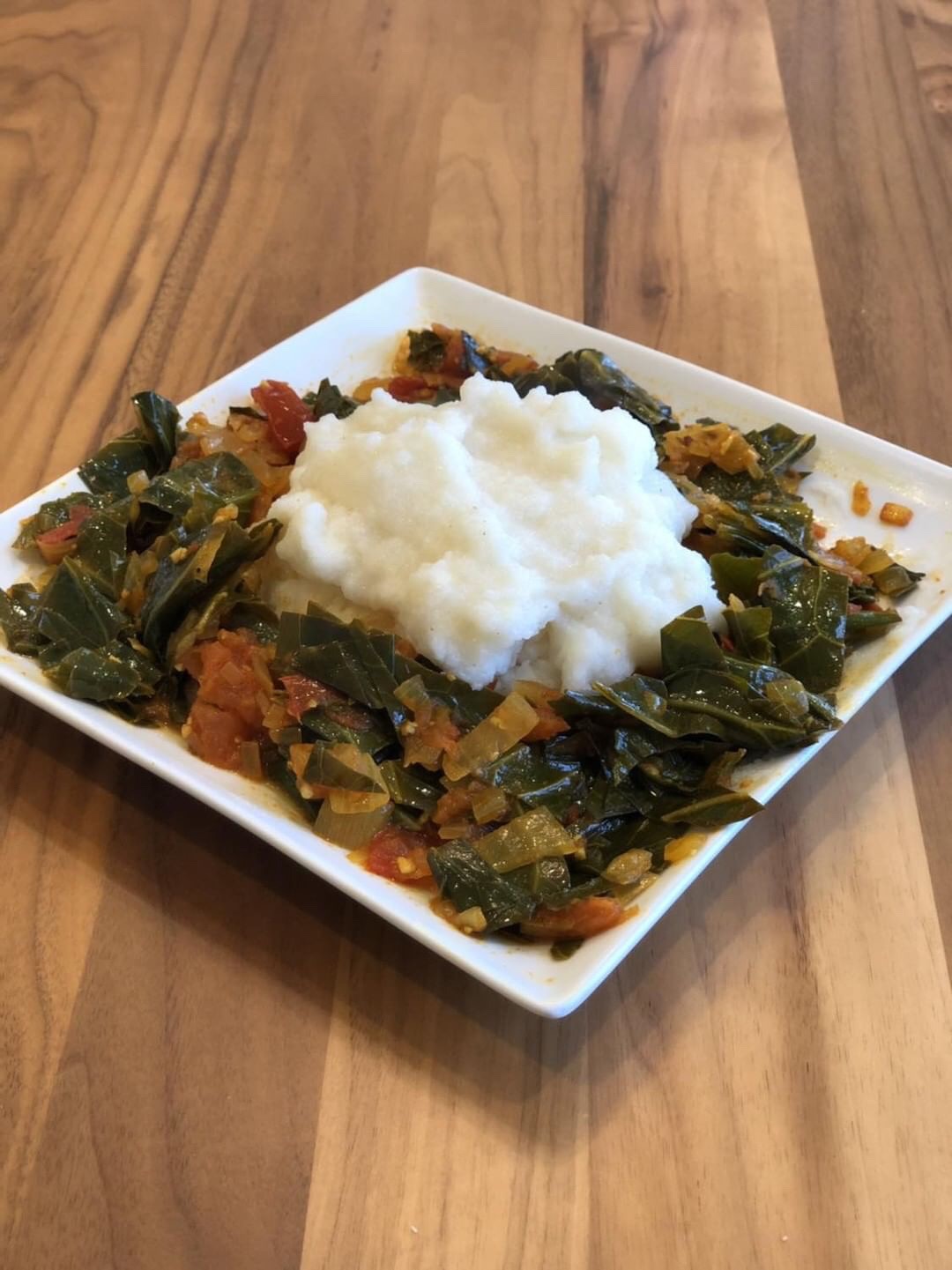
Hello fellow foodies and welcome to my blog! Over the next four weeks, I’ll be taking a culinary journey around the world. Starting in Africa, I’ll move to Asia, Europe, and finally the Americas. Now, without further ado, I present my first meal, as you can see above: ugali and sukuma wiki.

Since maize was introduced to Sub-Saharan Africa by the Portuguese in the 16th century, ugali has been a staple starch in much of Eastern Africa (particularly Kenya). While itself bland in taste, it goes well when paired with a well seasoned meat or vegetable dish, such as sukuma wiki. Ugali is a very quick and simple dish made by cooking cornmeal in boiling water, but it does require a lot of attention. If you’re looking at the picture above and wondering how the cornmeal mixture is white, it’s because you need to buy white cornmeal. While in the Americas, yellow corn grows in abundance, white corn is far more prevalent in Africa. So, to get the desired aesthetic for the ugali, buy white cornmeal. I used P.A.N’s white cornmeal, but any brand will do.

Cornmeal that I used

Now, to the cooking:

Ingredients:

  • About 4 cups water
  • 2 cups fine corn meal

Step 1: Boil about 4 cups of water and once water is at a boil remove roughly one cup from the pot.

Step 2: Slowly – and I cannot stress this enough – whisk in 2 cups of cornmeal. This step is crucial. If you pour the cornmeal in too quickly or forget to whisk, it will clump up and become lumpy – I learned this the hard way unfortunately.

Step 3: Once the two cups are added, take a wooden spoon and stir the cornmeal mixture until it is smooth and lumpless. Then, pour the remaining water into the pot and cover for roughly 10 minutes. After that, let the ugali cool and you’re finished.

—————————————————————-

Sukuma Wiki is Swahili for “stretch the week,” meaning that it is a simple and affordable meal that can get you through the week when more expensive foods aren’t available. I chose to make the dish vegetarian, however you could easily include chicken or ground beef.

Now to the cooking:

Ingredients:

  • About 8 leaves of collard greens
  • 1-2 cups chopped or ground beef/chicken (optional)
  • 3 medium tomatoes diced
  • 1-2 teaspoons minced garlic
  • 1 large white onion
  • 2 or more tablespoons cooking oil (I used vegetable)
  • 1 tablespoon smoked paprika
  • ½ teaspoon coriander
  • 1/2 teaspoon turmeric spice
  • ½ teaspoon cayenne pepper
  • 1 tablespoon lemon juice
  • 1 tablespoon bouillon powder
  • Salt and pepper (to taste)

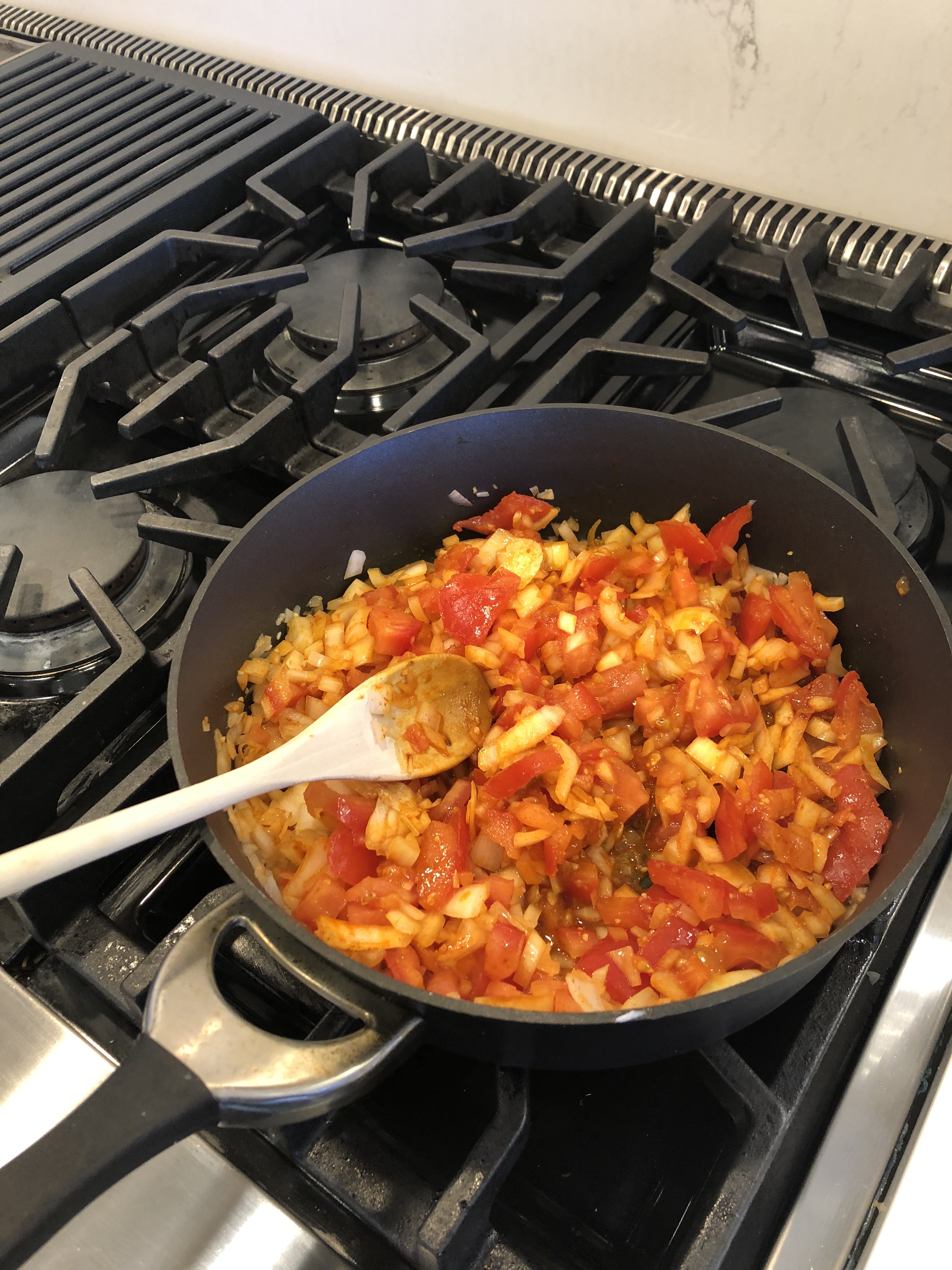
Step 1: Add chopped onions and minced garlic to a skillet with oil and cook until sautéed.

Step 2: Add tomatoes and all spices except the cayenne pepper and cook for another 2 minutes.

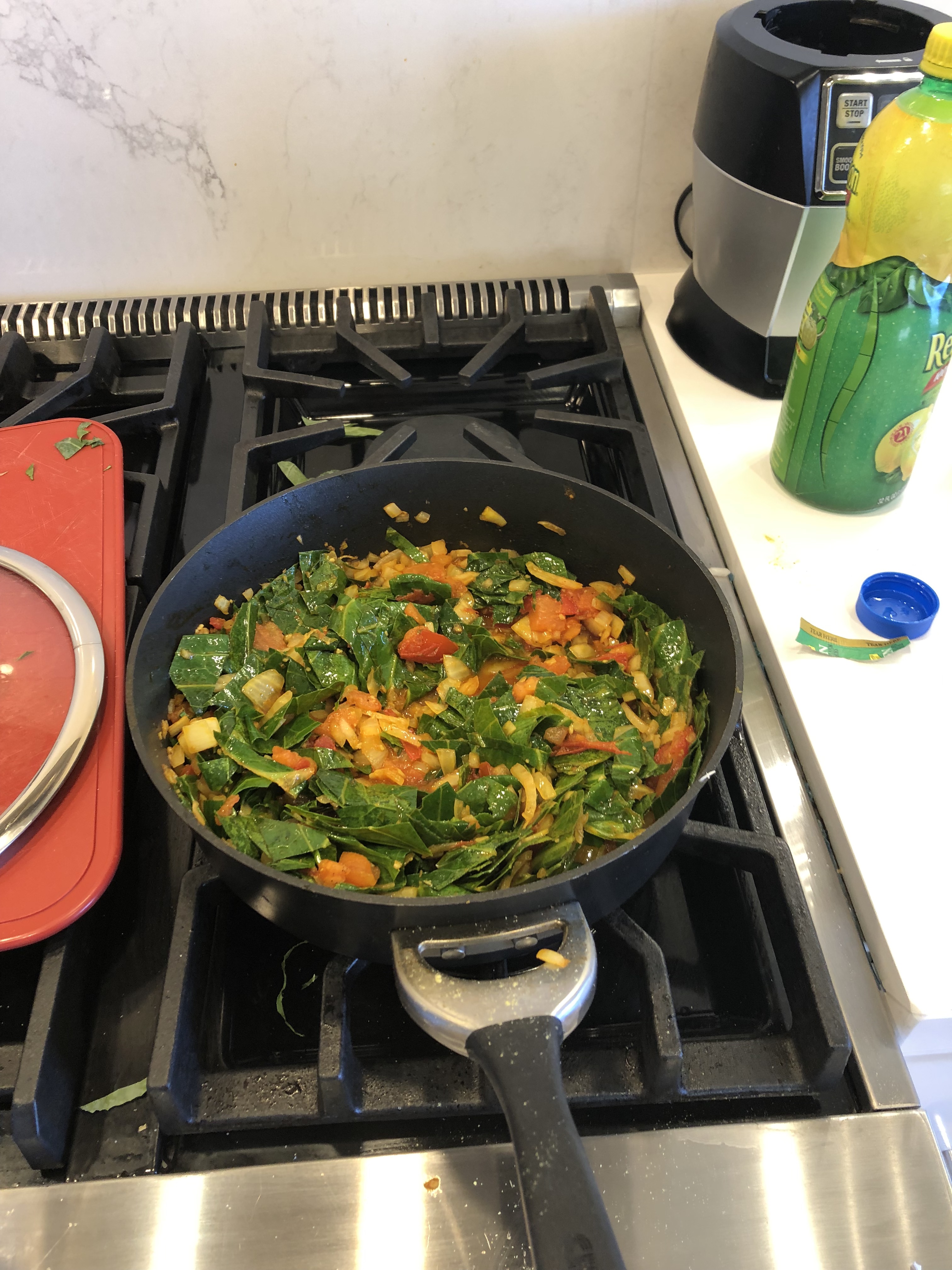
Step 3: Now, add the chopped greens, cayenne pepper, and lemon juice and cook for 5-10 minutes. Here, you can add salt and pepper to taste.

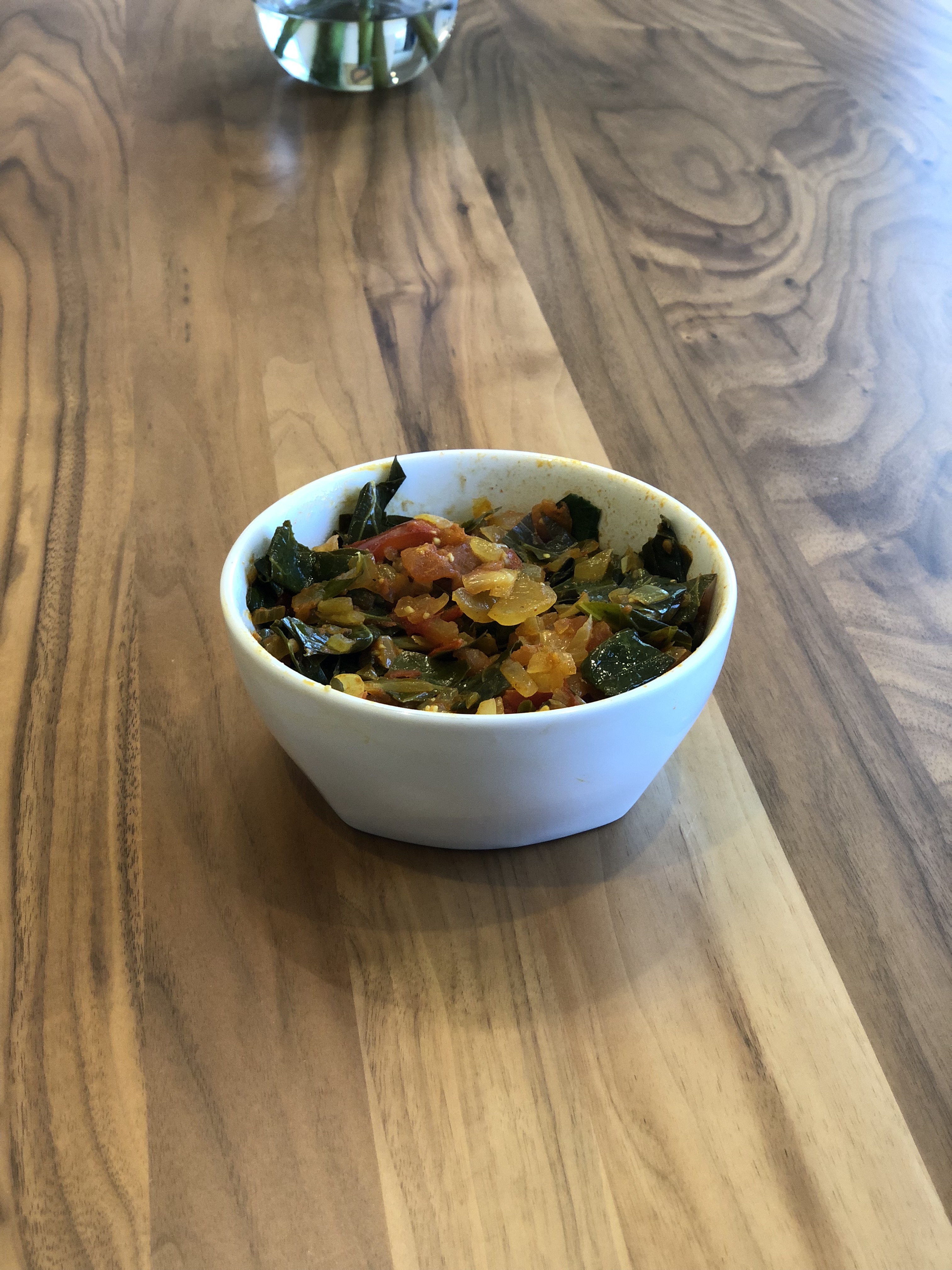
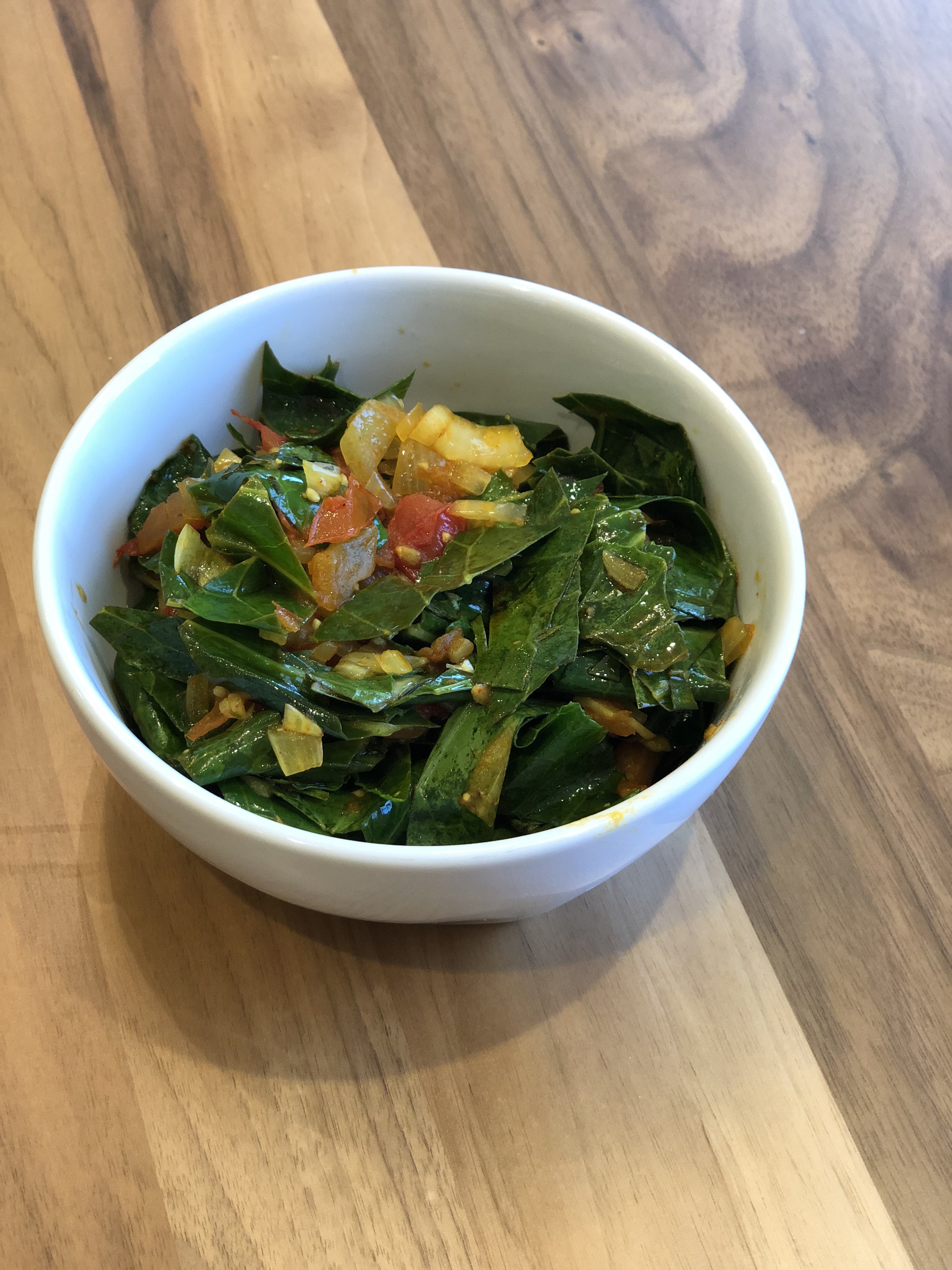
Past 5 minutes, the greens will be cooked; however, if you prefer softer greens cook longer. Note that the longer you cook, the duller in color the greens will become. Below you can see a comparison of greens that I cooked for about 7 minutes versus greens that I cooked for close to 15 minutes.