Pork Baozi
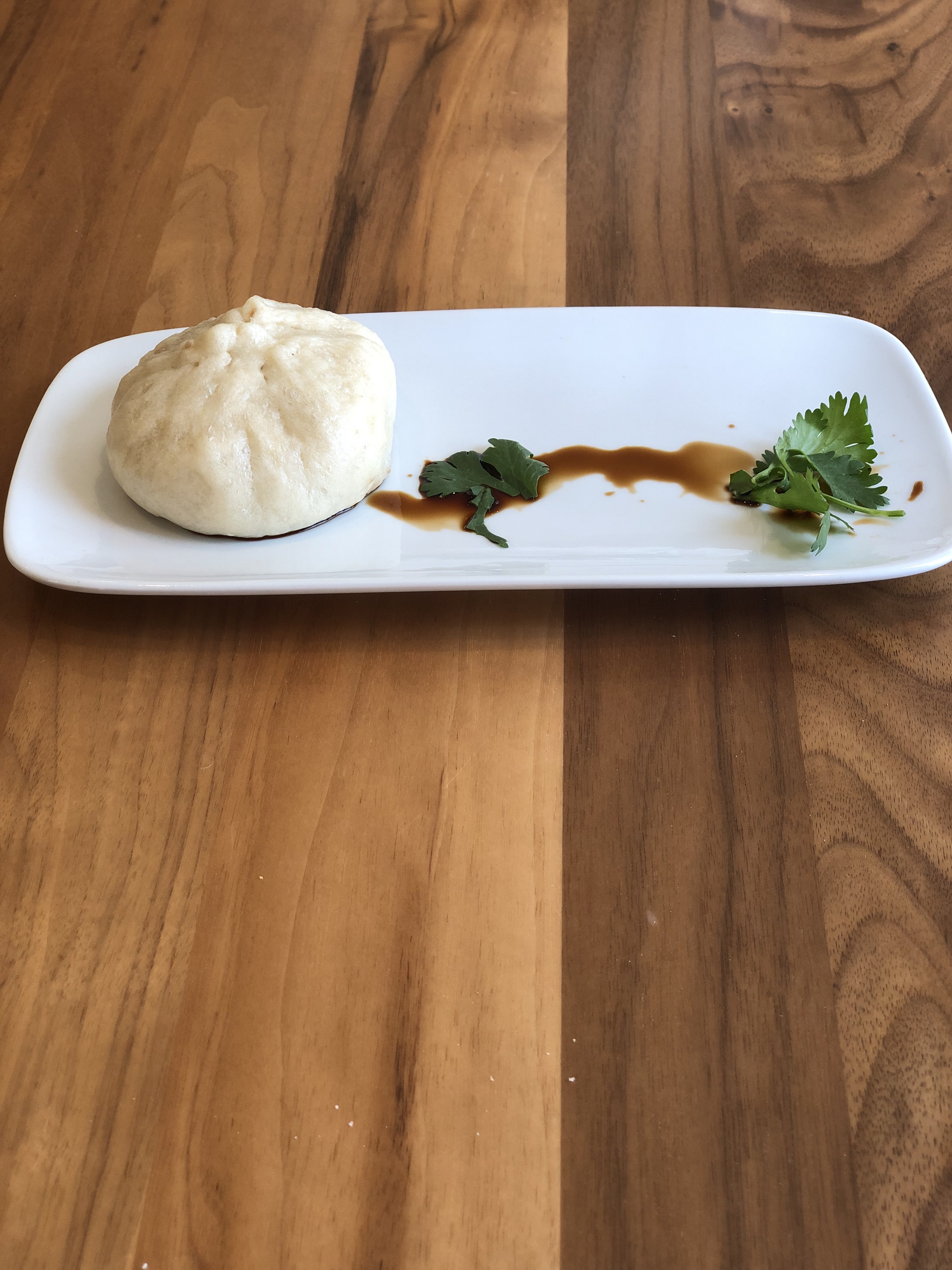
For day two of my week in Asia, I decided to make pork baozi. Baozi is a staple in many parts of China with its origins supposedly back in the 3rd century A.D. I decided to make pork baozi, because it is the most traditional kind; however, if for religious or dietary reasons you cannot eat pork, chicken is a fine substitute.
Now, to the cooking:
N.B., I decided to make the dough myself. I would caution against this as it makes wrapping the baozi a lot more difficult. Instead you can find dumpling wrappers either at your local Chinatown or h-mart.
Ingredients:
For dough:
- 2 cups all-purpose flour
- 3/4 cup water
- 1 tsp yeast
- 1 tsp sugar
For filling:
- 12 oz ground pork
- 1 tsp minced ginger
- 1 stalk of scallion
- 1 tbsp soy sauce
- 1/4 tbsp salt
- 1/4 tbsp sugar
- pinch of pepper
- 1 tbsp oyster sauce
- 1 tbsp rice wine
- 2 tsp corn starch
- 2 tbsp sesame oil
- A little less than 1/2 cup water
Step 1: To make the dough, put 3/4 cup water in a bowl. Next add sugar, then yeast and let sit for 10 minutes. This should be enough time for the yeast to activate. If there are no bubbles at the top of the bowl, let sit for around 5 minutes longer.
Step 2: Slowly add water & yeast mixture to the flour in three intervals. Mix after each interval.
Step 3: Once all the water is added and the dough has come together, transfer the dough to a clean bowl and cover the bowl in saran wrap. Place the bowl in a warm place so that it can rise.
- What I did was place a mug of water in the microwave and heat for two minutes before places my dough in the microwave and letting sit for an hour and a half. However, as long as the resting place is warm – but not too hot – it doesn’t really make a difference.
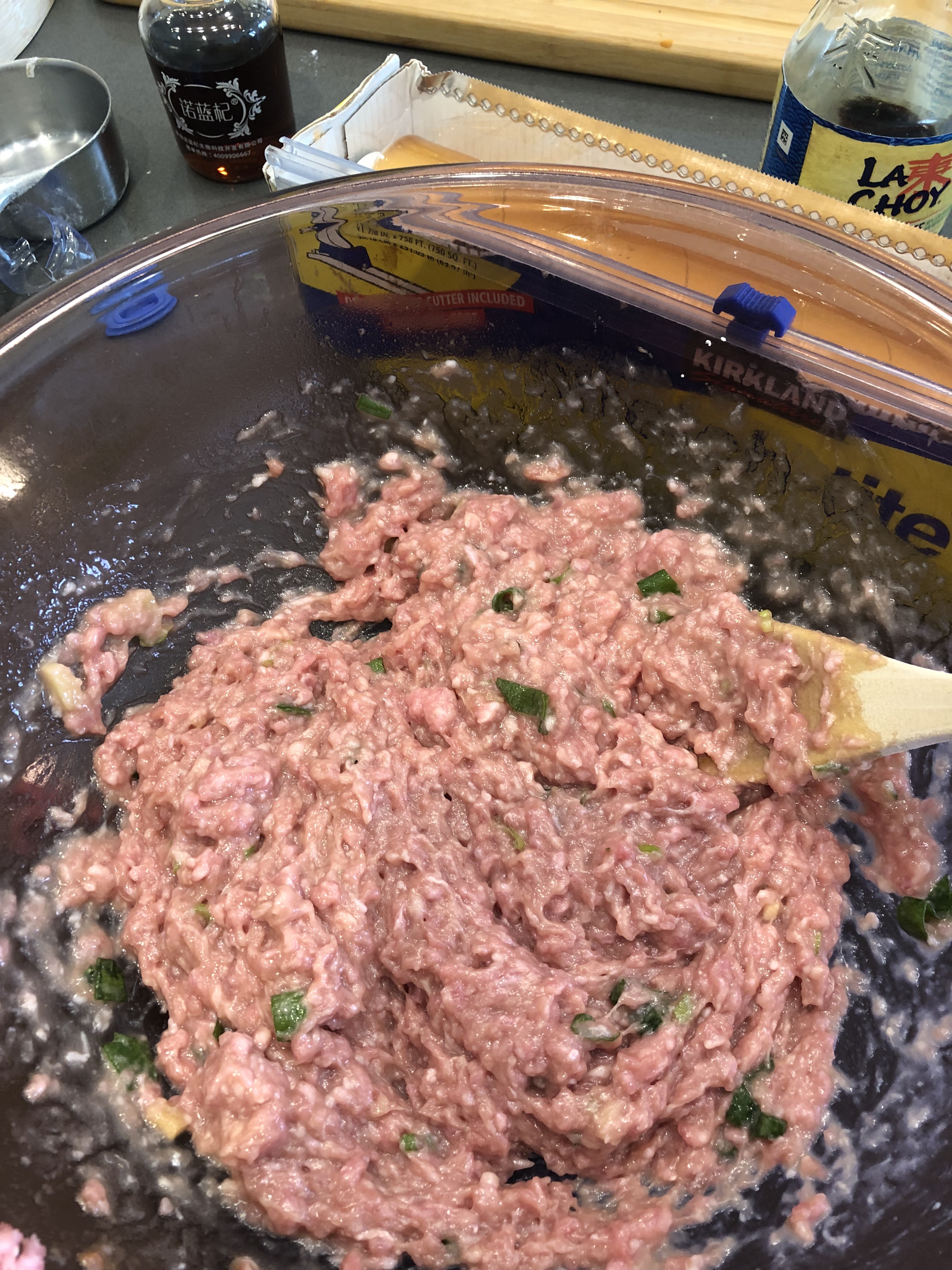
Step 4: While the dough is rising, it’s time to make the pork filling. Add all of the ingredients, except the ~1/2 cup of water to a bowl and mix. Next, slowly and again in three intervals, add the water to the pork mixture. You’ll see the pork begin to get mushy and more and more like a filling.
Step 5: After an hour and a half has passed, take the now-risen dough and knead it to remove any air-pockets. Cut the dough in half and roll it into a cylindrical shape.
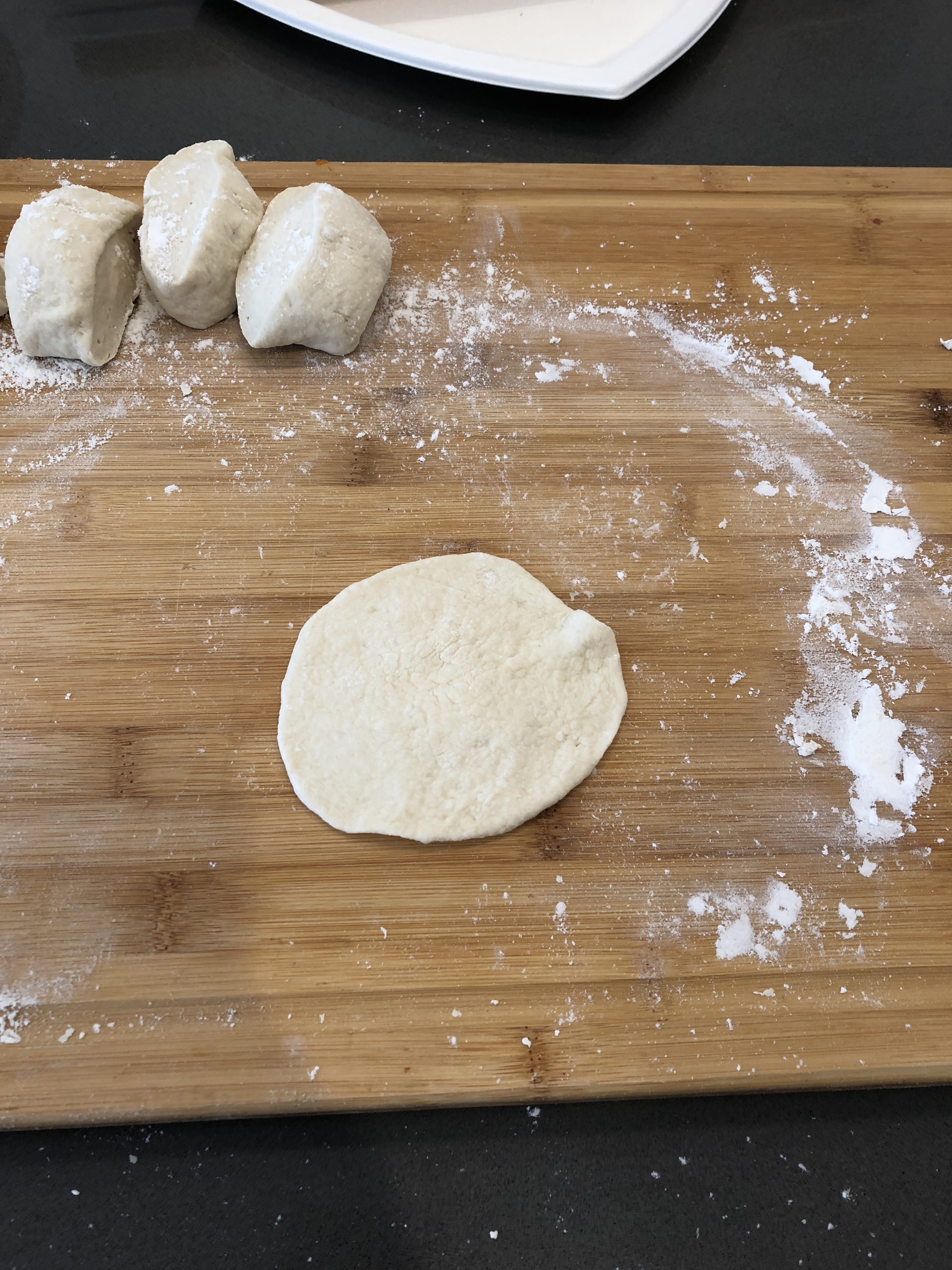
Step 6: Cut the dough into five or six even pieces and flatten the dough out until it is thin and bigger than your palm. You want the edges to be thinner than the middle, as the filling will sit in the middle and we don’t want to baozi to break.
Step 7: Now we come to the final and most difficult part: putting the baozi together. I’ll link a video here on how to do it.
Step 8: Fill large pot with hot water and place the baozi into a bamboo steamer over the pot and let rest of 10 minutes. Next, bring water to a boil and steam the baozi for an additional 15 minutes.
In doing this I found that my dough was a little too thick to make the intricate designs that I wanted for the baozi, which is why I recommend using pre-made wrappers. I used them for the Nepali dumplings that I made later in the week to great success (if I dare say so myself). Regardless of how they look, I can guarantee that this recipe tastes delicious!

 Trey's Food Journey